Search This Blog

Thursday, July 9, 2015

Tightening Just a Bit

      A couple of times readers of my manuscript have suggested that I tighten up the language, and I was never sure what that really meant.
     Recently an AROHO sister, Kristen Ringman, posted an interesting piece about the overuse of the word JUST which caught my attention. I know I use that word a lot. The writer explained how the word is often used by women writers to soften their expression or to seek permission to even have something to express.


      I decided to search my work-in-progress for the word just and found that I had used it 277 times out of 123,000 words. I checked each instance carefully. While some were justified I eliminated more than 100 of them that served simply no purpose.
      I believe that must be a good example of tightening. Like kegal exercises for the female writer. Do I dare now do a search for VERY...


just
jəst/
adjective
  1. 1.
    based on or behaving according to what is morally right and fair.
    "a just and democratic society"


adverb
  1. 1.
    exactly.
    "that's just what I need"
    synonyms:exactlypreciselyabsolutelycompletelytotallyentirelyperfectly,utterlywhollythoroughly, in all respects; More
  2. 2.
    very recently; in the immediate past.
    "I've just seen the local paper"
    synonyms:a moment ago, a second ago, a short time ago, very recently, not long ago
    "I just saw him"

Thursday, July 2, 2015

Still Mile High #HNS2015

       Just waking up from my first night at home after attending the 2015 conference of the National Historical Society in Denver. The travel was tough, and it was not an inexpensive trip, but I think it was worth it. I met many wonderful people (history geeks are such fun!) and heard several great speakers.

View from my room.

       My Blue Pencil writing mentor, author Wendy Perriman, gave me some seriously helpful feedback on the beginning of my novel, as did the two agents who heard the first two pages read aloud in another session. That combined with the material Larry Brooks covered in his workshop on The Architecture of the Historical Novel, really had me thinking and working during the conference.
      The end result (so far) is that the novel I brought home is changed, and for the better. I'm really excited about the changes as I did not see them coming. The changes include a new title that came to me in Denver. Now I'm on to final revisions with feedback from my beta readers, and then I'll be sending it off to agents.
      My primary objective in attending the conference was to see if I could get one agent interested in my book, and two asked for more! All in all, that is so encouraging in what can be so daunting a process.
Diana Gabaldon talking sexy.

      It was also wonderful to meet and get books signed by Diana Gabaldon and Karen Cushman, and to get my pic taken with the very dapper General George Washington, as portrayed by Vern Frykholm.
 General Washington arrives.

Now --- back to work.


Wednesday, June 24, 2015

Most Unusual Feedback

     Reports from my beta readers are still rolling in and I am pleased to report that the feedback is by far mostly positive and encouraging. I gave a talk about the book this week and three people stepped forward to volunteer to be beta readers without being asked. They are just that interested in the story!
     Below is beta reader feedback that I think is most unusual. A poem! It was written by the current Poet Laureate of Portsmouth, New Hampshire (where much of my novel takes place), Katherine Leigh. She has left it untitled and says it is dedicated to me, and to George Washington.


We have made colossal mistakes in structuring
The world, with no respect for the obvious,
That all is here to be shared, not taken by force.
No brilliant idea for commerce is greater than kindness.
No amount of money makes up for lost integrity.
How do we forgive ourselves the crime of slavery?
Transform our emotions to a prism of empathy
Released from a prison of cultivated ignorance?

How did Washington, born to a culture depending on slavery,
See the totality of its harm, while others thought necessity?
What helps our brains notice greater truths over daily
Habitual falsities reflected by common greedy ways?
Why do the masses of abused not trample their abusers?
Is it the shock of witnessed cruelty that prevents them?
Those that flee are condemned, hunted, their families tortured.
Like stressed animals who know not which road to take,
Though glutted on their slave-supported lifestyles,
The public was lead by the General, by their President,
To perceive by degrees what is fair and constitutional,
To re-examine a set of beliefs hollow and convenient
For justifying an otherwise obvious crime against humanity.
To accept the equality of people whose skin colors alone
Made up their diversity. Washington was popular,
He was careful. He was most advanced in his thinking.
He was elected?, appointed, pleaded with to accept leadership.
He knew the burden of far-sightedness and took responsibility.

Even now, have we learned to honor mental diversity,
In ourselves and in others, that which makes us
Different can make us whole? Can we identify and be the full
Extent of our inborn uniqueness, admire skin color,
Emulate race and culture, acquire exposure to ideas that differ
From our own, find ways to blend? It’s a good solid mandate,

And, apparently one requiring championship that has no end.

Kate Leigh, all rights reserved.

 PPL

Monday, June 22, 2015

Check out this vimeo poem!

      I was honored to receive the Esther Buffler Poetry-In-Schools Fellowship from the Portsmouth (NH) Poet Laureate Program for 2015. I worked with four classes at the high school working with English teacher Ms. Laura LaVallee.
      At my first visit I introduced the students to Esther's work, and some of my own. I then shared a selection of digital poems. Again the work of others and one of my own. We did a brief writing exercise and talked about how the poems we were reading together could be digitized to spark their creative thinking. I left them with the challenge of creating an original digital poem using a poem of their own or another that they identified with. They were given complete creative freedom to craft digital poems using any applications and resources they liked working with cell phones and /or computers. They were told they could work individually or collaborate. I wanted the experience to be as open-ended as possible so as not to limit the possibilities.
     A couple of weeks later I returned, and just as the school year was drawing to a close, we held an "open mic" event where the students shared their creations. As I had anticipated there was a wide variety of work. As I had hoped the students were pushed a bit out of their comfort zones, and in many cases, had tried something new. All had to take a good hard look at a poem and think about the many ways it could be interpreted and what it meant to them. The most popular poem selected was Robert Frost's The Road Not Taken. Some of the digital poems were funny and some were serious. Some were personal and some were not. Success was achievable for every student, and some took an opportunity to soar. A few of the students said the assignment was frustrating, but many said they enjoyed trying it. Ms. LaVallee and I have already begun discussion of what we could do to improve the learning experience if we were to do it again.

 Two students prepare to share their digital                                                                                     poem called Kevin Love / Kevin Hate.

    I would like to thank the PPLP, Ms. LaVallee, and all of her students for the opportunity and for their poems, and I share below the work created by one of the students with her permission. It is titled South and Sagamore, Gravestones.
  
      Poetry and production by Julia Taylor, age 16.
      Cinematography by Alden Taylor, age 12.


      https://vimeo.com/131168223


Saturday, June 13, 2015


Instagram

Tuesday, June 9, 2015

Reports are Rolling In

      Summer is such a crazy time of year for me as my museum hours surge, but my writing work can not take a back seat.

     My novel is out in the hands of several serious beta readers. Its a scary feeling much like when your child is off to a formal. You know they looked beautiful when you let them go out the door, but still feel a vulnerable mix of confidence and terror at what might happen to them on the dance floor. You pace as the minutes tick by, waiting and wondering if there is something else you should have done...

     The first report has come in. This one from my writing mentor, Pat Parnell. At 91 years of age she is still sharp and sure. I am thrilled to share that almost all of her feedback was positive and encouraging. A few suggestions for changes will be easy fixes, and she kindly gave me much in the way of line editing because she has so much experience as an editor.

The divine Queen P. sharing her poetry last week.

     Here is one paragraph from her report to me;

      "You may originally have intended to tell the story of the life of Ona Judge Staines, but the book metamorphed into something much more significant and powerful. What you have done was take two major social issues from the late colonial period and the early years of the new nation - slavery and racism - and explore them as they impacted the lives of two very different but interconnected individuals - George Washington, the most esteemed American of his day, and Ona Judge Staines, the escaped Mount Vernon slave who lived all her life in the shadows."

       She also made a suggestion that I had never given any thought, and now of course, I am. Pat urged me to consider marketing it as a YA novel as she thinks "it wold be very appropriate on a recommended list of books for high school juniors who are studying American history." While I wrote the novel for adult readers, I am intrigued with this idea. What do you think?

Thursday, May 14, 2015

A Spring Greeting from Maine


                                         I took this photo and wrote this haiku this morning.


Curled up tight all winter.
Contracted to save ourselves from freezer burn.
We thaw, and finally unfurl.

Monday, May 11, 2015

Eliciting Empathy

     While visiting Portsmouth last week, Sue Monk Kidd was asked what she most wants readers to take from her writing, and her answer was empathy.

      This is a quote by her;

     "Empathy is the most mysterious transaction that the human soul can have, and it's accessible to all of us, but we have to give ourselves the opportunity to identify, to plunge ourselves in a story where we see the world from the bottom up or through another's eyes or heart."

     I really relate to the idea of eliciting empathy with fiction, and am devoting all of my pleasure reading this bee-buzzing month of May to reading Monk's books.

Satellite (620×310)

Friday, May 1, 2015

Not So Bad

     Didn't at all mind the rejection that came in this afternoon. Its all in the writing I guess.

"Thank you so much for submitting your work to the --- poetry contest. Unfortunately, we were not able to select your poem as one of the contest winners.

Of more than 500 poems received, yours was among 100 excellent poems sent on to the judges. We are truly honored that you shared your work with us. Thank you for helping to make our first poetry contest a great success.

Wishing you great success in future publication efforts!"

Wednesday, April 29, 2015

On finishing my novel

      My goal for the winter was to hole up in my little writer's cottage and finish writing this book. I didn't mean that Mother Nature needed to see to it that I did just that. But I am happy to report that I did just that.
   

      My manuscript is finished! It is out to beta readers this week, and will certainly go through another round of revisions when I hear back from them. Right now it is clocking in at 123,000 words. It's a hefty subject!
      I have also just sent off the opening to a few agents that top my list, and while I will probably have to send it out hundreds of more times, that first launch is exciting. Like putting your baby on the school bus for the first time. It leaves you in a vulnerable state, and the waiting begins.

Saturday, April 18, 2015

A little poem of how I've grown through yoga...

Gratitude

Its been years
since my ears
filled with tears.

by Tammi J Truax, all rights reserved.


2014-National-Poetry-Month-Poster.jpg (180×240)

Happy National Poetry Month!

Monday, March 30, 2015

A Happy Little Announcement

       I have been working with children all of my professional life, and it continues to be important to me. Today I represented writers at the annual career day at the middle school my children attended, and really enjoyed my time with the eighth graders. One young man came up and shook my hand after. I was struck by how polite and engaged they all were. 
     So I am really looking forward to my next gig, one that I've been anxiously waiting to announce until all of the ducks were cued up.
     I have been asked to be the poet in residence this year at Portsmouth High School. The Buffler Residency in Poetry is sponsored by the Portsmouth Poet Laureate Program thanks to an endowment from the estate of our city's first poet laureate, Esther Buffler.
     I have a vague memory of Esther Buffler, but know her poems and her reputation. I am honored to carry on her work. I intend to wear a wacky hat when I work with the kids, and hope that they will join me.

     Read more about Esther here;

http://www.seacoastnh.com/Famous-People/Link-Free-or-Die/poet-esther-buffler/


index.1.jpg (263×300)

       You might be able to hear her on this fifteen year old link;
http://www.npr.org/templates/story/story.php?storyId=1048872

Sunday, March 8, 2015

Bloody Sunday blog post

      In honor of Bloody Sunday I wrote today in my just-about-finished historical novel about the black man's right to vote.

     I had not known when I began my research for this book that the struggle began as early as the time period that I am writing of (1780 to 1850). All of the characters in my book were real people. Every single one of them. Without question the most remarkable life story I have put together is that of William Costin. He is mentioned in an old excerpt below, one of the few historical accounts of this man's so very noteworthy life, in The Freedmen's Book, an abolitionist work originally published in 1865. (That is a worthy read and is available free on kindle.)

     Today, I worked the quote by John Quincy Adams into my novel, that it might be remembered. 

     You will learn all about Costin's contributions to our country in my book. Here is his image, commissioned by The Bank of Washington upon his death, further evidence of his accomplishments.


Page 220 from THE FREEDMEN'S BOOK, by Lydia Maria Francis Child:

WILLIAM COSTIN.

       MR. WILLIAM COSTIN was for twenty-four
years porter of a bank in Washington, D. C.
Many millions of dollars passed through his hands, but not
a cent was ever missing, through fraud or carelessness. In
his daily life he set an example of purity and benevolence.
He adopted four orphan children into his family, and
treated them with the kindness of a father. His character
inspired general respect; and when he died, in 1842, the
newspapers of the city made honorable mention of him.
The directors of the bank passed a resolution expressive
of their high appreciation of his services, and his coffin
was followed to the grave by a very large procession of
citizens of all classes and complexions. Not long after,
when the Honorable John Quincy Adams was speaking
in Congress on the subject of voting, he said : " The
late William Costin, though he was not white, was as
much respected as any man in the District ; and the largo
concourse of citizens that attended his remains to the
grave as well white as black was an evidence of the
manner in which he was estimated by the citizens of
Washington. Now, why should such a man as that be
excluded from the elective franchise, when you admit the
vilest individuals of the white race to exercise it ? "

Tuesday, February 17, 2015

George Washington, Slave Catcher


       Yesterday was Presidents' Day, and the New York Times published an op-ed piece that has been getting a lot of traffic on the world wide web, entitled George Washington, Slave Catcher, complete with an eye-grabbing graphic of the General riding upon an enormous iron-shackled hand, a hand carrying him forward.
       It is an important article and I'm glad it is going viral. I admire Professor Dunbar's work. But the article, in its brevity, tells just part of a much bigger, and more important story. Ultimately, it is the story of the making of America.
       And since I'm making that claim, I will take this opportunity to officially announce that the life story of Ona Judge Staines, from her birth in a slave cabin at Mount Vernon to her death in fugitive slave cabin at Greenland, NH seventy-five years later is the basis of the 125,000 word novel I have been working on for over two years and am finishing this winter. It truly is a remarkable story, so rich in characters that I had to invent none. Places and events are all real and familiar too, though they are of a long ago that is much less familiar. I so look forward to sharing it with the world.

http://nyti.ms/1FgSnvk


http://www.nytimes.com/2015/02/16/opinion/george-washington-slave-catcher.html?_r=1


Wednesday, February 11, 2015

The Poet's Tale; Lady Wentworth

       Your Valentine deserves a copy of this humorous love poem by Longfellow, which I released last year in this beautiful new version brilliantly illustrated by beloved Portsmouth, NH artist Bob Nilson. Contact me or the Portsmouth bookseller you heart emoticon. (The link below is for the eBook.)

http://www.amazon.com/Poets-Tale-Lady-Wentworth-Illustrated-ebook/dp/B00G6R06IC/ref=sr_1_1?ie=UTF8&qid=1423683479&sr=8-1&keywords=lady+wentworth+the+poets+tale

Sunday, February 8, 2015

With gratitude ...

      Interesting that today I wrote a new poem for the first time in a couple of months, and then received word that I have been nominated to be the next Portsmouth (NH) Poet Laureate. I am a bit like the proverbial bridesmaid, though without a funky dress, regarding the laureateship. This time, though, I no longer qualify as I have moved to the other side of the Piscataqua. Still it is wonderful to be nominated, and I humbly thank whoever took the time to honor me that way. 

On seeing Natasha Trethewey

     I went to see and hear Natasha Trethewey speak at my Alma mater this week. I was already a fan of her work, and had been looking forward to the talk entitled "Changing the World One Poem at a Time: Using the arts as a tool for understanding difference and as a catalyst to explore complex topics such as race", so central to the research and writing I have been doing.
     But something happened during the talk. I'm not at all sure what it was. But Ms. Trethewey, simply by sharing herself with her audience, became my favorite poet. I realize that sounds silly and simplistic, and will attempt to explain.
     My writing, both prose and poetry, is more often than not, an exploration of issues of race. My poetry, like Natasha's, often looks at snippets of history and / or art, to try to make sense of my own life and the America I live in. I have always been more drawn to narrative poetry, and consider myself a story teller, but I aspire to something more. Something she has voiced about herself as a writer as in this quote;
     “[I am] a poet interested not only in the sounds of language and in its beauty, but in its ability to help us deal with our most difficult knowledge and help us move towards justice.”
     I am especially interested in working with the concept of historical amnesia that Natasha talks and writes about, and much of my own work seems to be an exploration of that.
     Her comments on that subject have inspired the following poem from me today. It is brand new so will be reworked several times before it is finished. It occurs to me this morning that this childhood memory, that has always stayed with me, may have been the very beginning of my own excavations of what came before me and what created me. Yet I would not have written this without Natasha's influence on me this week.

Visiting Gettysburg

I was so little
that I remember little.
Only boundless rolling knolls
of luxurious green grass.

A perfect place for family fun.
But I think I had a child’s sense
that the beauty was false.
A sad secret rippled beneath.

Not the green of the grass
or the blue of the sky, but red.
A cold clotted river of loss,
mixed by bayonets and shovels.

Men, women, and children,
black, white, and native,
union, confederate, objector.
All co-mingling together forever…

beneath my skipping Mary Jane’s.
I breathed the false exquisite beauty
of boundless rolling knolls
of luxurious green grass.

Tammi J Truax. All rights reserved.

      The favorite writer status she has with me now is not just about me admiring her as a writer. It is at least as much about me seeing her as a teacher.  I endeavor to write the way she does; with great honesty and courage, but in stunningly beautiful words and forms. Considering the chasm between our accomplishments in that regard, this is a daunting task, and I have a lot of work to do!
     I share this video of Natasha talking about her work on Native Guard which caught my attention because one of the dozens of books I've read this year for research on my historical novel was Dr. Mutter's Marvels by Cristin O'Keefe Aptowicz. I was not aware of this museum.


     Finally here is a video of Natasha reading her poem Incident.


Monday, January 19, 2015

A Wish

       On this day most of all I wish my children's book about Reverend King visiting NH could find an interested publisher.

Friday, January 16, 2015

Retreating to the Green Mountains

      Well, you probably already know I am a serious word counter, and post my daily total on my Facebook page. You may also know that I have become a fan of writing retreats. It has actually been quite a long time (two years, feels like a long time!) since I have had a real vacation (not that I am opposed to that!) as I have been spending any travel money I have on retreats or research trips.
      I am happy to announce that I have been accepted into one this winter which gives me something to look forward to as I hunker down here and finish up this first draft of my first historical novel. I hope to head up into the Green Mountains of Vermont in mid-March with a completed manuscript, and begin my revisions there. I think I can do it!
      The retreat is called When Words Count and takes place at the farm pictured below.

  0152da6.png (646×220)

Sunday, December 28, 2014

Death Becomes Her (Sometimes)

     Here is something I wrote recently following one of my weekends in NYC. This was originally published by Seacoast Media Group (Dec. 2014). I also took all of these photos.

      Death Becomes Her

By Tammi J Truax

       Vanity Fair called it “… a perfect little black cocktail dress of a show…”, and I highly recommend it too. Now through February first there is an exhibit at The Metropolitan Museum of Art’s Anna Wintour Costume Center which I recently visited, and knew many of you would be interested in it. The exhibit is called Death Becomes Her: A Century of Mourning Attire.

           This exhibit really is a striking artistic as well as cultural display. The detail and darkness of the garments are contrasted starkly by the white mannequins wearing white wigs in the all-white gallery. White curtains and panels add a quiet and slightly sacred softness to the large open space. There are about thirty ensembles for men, women and children on display, along with accessories, quotes, fashion plates and historical photographs.

       The history of mourning attire is fascinating as alluringly alluded to in this quote from the exhibit’s curator Harold Koda, “The predominantly black palette of mourning dramatizes the evolution of period silhouettes and the increasing absorption of fashion ideals into this most codified of etiquettes. … The veiled widow could elicit sympathy as well as predatory male advances. As a woman of sexual experience without marital constraints, she was often imagined as a potential threat to the social order.”

      While the wearing of black garments when in mourning dates back to ancient times, this exhibit covers only a century of the tradition spanning the years from 1815 to 1915. That century, though was a period of time when mourning fashion, as a part of grief expression, became very serious in our nation in large part due to the overwhelming loss of life in the Civil War. While across the pond all time champion mourner and fashion trend setter, Queen Victoria, donned an all-black ensemble upon the death of her husband Albert in 1859, which she would continue to do every day until her own death forty-two years later.

     The more common cultural requirement for wearing black during that century was two years. These demands were focused on the female, but men had some requirements to follow too. As evidenced by the elaborately designed ensembles in the exhibit this must have been more than just an emotional drain on the bereaved, but also a financial one. A considerable amount of money had to be set aside to have a mourning wardrobe made, which of course, many war widows could ill afford to do. Poor people would often resort to dyeing their clothes black so as not to defy convention. There were stages of mourning dress as well; “full mourning” was followed in due time by “half mourning” when a woman could begin to introduce one or two other colors into her black outfits as long as they were not bright or light. Shades of gray were considered safe.


      After the death of her son First Lady Mary Todd Lincoln was once reported to be wearing “deep black”, the meaning of which seems inexplicable, but helps us to understand how society judged the person by what she was wearing. There were even expectations on the fabrics that should be chosen, with a preference for dull, not shiny ones, such as crape.

       I had always assumed that a widow’s black clothing communicated only that she was still grieving for the loss of a loved one. I was surprised to learn that these costumes were also used to communicate her availability for remarriage, and that suitors and busybodies could interpret when she could be remarried based on the stage of dress. Veils, generally only worn when leaving the home, had another variety of meanings for the onlooker to interpret.

      While I am greatly relieved that such harsh expectations have been eased, I do find the study of them interesting. Unlike most museum exhibits, this one has a little something for just about everyone. Death Becomes Her is an enthralling look at our past that will be of interest to both fashion and history enthusiasts, as well as all ilk of Goth folks and ghost hunters. The exhibit can be seen seven days a week at the museum’s 1000 Fifth Avenue location in New York City which charges pay-what-you-can admission.


Friday, December 12, 2014

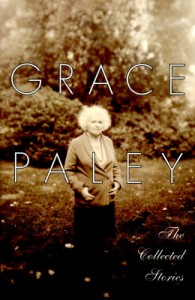
Speaking for Grace Paley

      Today on what would have been her 85th birthday I pen a tribute post to Grace Paley. A Jewish girl from the Bronx, Grace lived out her later years in Vermont.

      Shortly before her death in 2007 I had an opportunity to study with her at a New Hampshire workshop, but because of family obligations I didn't. I have not, and I'm sure I never will, stopped regretting that. Regrets torment me sometimes. Writing of them relieves the torment. Sometimes.

      So I embrace her words, the gorgeous, relivable legacy of a writer. Her prose and her poetry, but more often her advice. This is a favorite;

       “The best training is to read and write, no matter what. Don’t live with a lover or roommate who doesn’t respect your work. Don’t lie, buy time, borrow to buy time. Write what will stop your breath if you don’t write.” 

         Though we suffered the loss of her, I am glad that she was spared living through recent events in our country which I think would have pained her deeply, as evidenced by the following quote given when she was asked of the world that she hoped her grandchildren would live in;

       "It would be a world without militarism and racism and greed – and where women don't have to fight for their place in the world."

      We can do better. We can bring more Grace to the way we live.

                                                            9780374524319-195x300.jpg (195×300)

      Still, we must not give up. As evidenced by these words she also left for us;

"Let us go forth with fear and courage and rage to save the world."

      And here in a 1992 interview Grace talks about her writing;

http://www.theparisreview.org/interviews/2028/the-art-of-fiction-no-131-grace-paley


Wednesday, November 26, 2014

White Mother Musings

       This is a painful week of Thanksgiving. The proudly American holiday of counting our blessings and of celebrating and sharing our abundance, occurring at the same time as all of the ugly truths and falsehoods in Ferguson remind us, yet again, of all that we have not accomplished as a nation. An ugly old legacy we just can't seem to process.
      I don't want to add to the divisiveness, which is so severe, that maybe, just maybe, some good can come from it. So I'm not blogging on the subject to engage in debate, simply as a bit of reflection.
      I just keep thinking of the Mom. Michael Brown's mother, Mrs. Lesley McSpadden.
      I have a son who is 6.4 and 250 lbs. too. I've had some fears for him since he achieved that size. My son, too, did some stupid things when he was a teenager. Mine too had several "brushes with the law", (though his were for marijuana and nothing violent). And the law where I live always allowed, even encouraged, me to throw wads of cash at them as a resolution. Which I always did. I have never had to worry, or even contemplate, that he would be shot six times. Shot dead.
      Sadly, I know many people will annihilate my analogy to justify the death, saying it was necessary and/or deserved. I have heard the arguments. They have accepted the old-as-the-Emancipation Proclamation self-defense testimony of a white man of equal size calling the suspect a hulk and a demon. Let's say, for the sake of argument, that that were true (though I don't find it all credible or even remotely believable in this case), we should still ask, we should still care, why? Why would any of that behavior have occurred? If the suspects were white youth what would have been different?
      What if he were your son?
      I'm going to share again the poem I wrote after the Zimmerman verdict, and am so sorry for the Browns. I wish them peace and comfort this week and always. What I know for sure is that while I can sympathize I cannot know their sorrow. I simply cannot know it. I can imagine it is unbearable, but I will never know.

My son and a friend in the back of my car a few years back.


      Lastly, since my blog is supposed to be about writing, I leave you with this excerpt from a 1960 American masterpiece of literature;

“The one place where a man ought to get a square deal is in a courtroom, be he any color of the rainbow, but people have a way of carrying their resentments right into a jury box. As you grow older, you’ll see white men cheat black men every day of your life, but let me tell you something and don’t you forget it - whenever a white man does that to a black man, no matter who he is, how rich he is, or how fine a family he comes from, that white man is trash.”
                                                                       ~ from To Kill A Mockingbird by Harper Lee.

For the Other Parents

Since the year 1863
there has been a talk many American parents
have to have with their American sons
at just about the time that their son’s
voices begin to change, and their muscles
harden into impending manhood,
at just about the time that referring
to the boy as boy becomes something else.
They say things like these,
things I have never had to say to my son,
nor have any of my ancestors
since the year 1863.

***

There will be times, from now on
when people will be afraid of you.
You have to be aware of this at all times,
to develop a sense for it, to feel it
before it turns bad, because
very bad things can happen to you
when people are afraid of you.
You can’t play with toy guns anymore,
or swords, or pick up pipes, or even sticks.
Always be aware of your surroundings.
Try not to go anywhere alone,
especially at night.
If you’re being followed try to find someone
so you’re not alone.
Cooperate with authorities even when
your dignity makes that hard.
Don’t do anything with your hands but put them up.
Don’t worry about winning or losing.
Your goal is to survive.
Let them stand their hallowed ground
that they’re afraid of you taking.
You just stay alive.
And always - remember
there is nothing wrong with you,
nothing wrong with the way you look.
You are who you have always been
and that is the ground that
you have to stand.

by Tammi J Truax
all right reserved